How to Choose the Right Contour Shade: Your Guide to Finding the Perfect Match
Let’s be honest, contour can feel… confusing. Not just where to put it (we’ve all blended a stripe and hoped for the best), but what you’re even using in the first place. Is it contour… or is it bronzer? And then there’s the shade. Too warm and it suddenly looks like bronzer. Too grey and it can feel flat. Too dark and it’s too much.
So if you’ve ever wondered how to choose contour shade without it looking obvious, muddy, or just slightly off, you’re not alone. The good news? It’s actually simpler than it seems.
In this guide, we’re breaking down what shade contour should be, how to find your perfect match, and exactly how to find your contour shade so it looks natural.

What Shade Should Contour Be?
Short answer? Cooler than you think.
If you’ve ever wondered what shade should contour be, here’s your reset: contour is meant to mimic natural shadows on the face. It shouldn’t be warmth, glowy, or sun kissed. That’s where things go wrong.
If your contour is too warm, it starts to look like bronzer… and suddenly your “snatched” moment turns into “softly sunkissed” (not the brief).
A good contour shade should:
- Sit slightly deeper than your natural skin tone
- Have a cool or neutral undertone
- Blend seamlessly into the skin without looking obvious

How to Choose the Right Contour Colour for Your Skin Tone
When it comes to how to choose contour shade, your skin tone is your starting point. But undertone is what refines it.
Fair to Light Skin Tones
If your skin sits on the lighter side, subtlety is everything.
Go for a light, cool-toned contour that adds gentle definition without looking too stark. Anything too dark (or too warm) can sit heavily on the skin and feel a bit obvious.

Medium to Tan Skin Tones
For medium to tan skin tones, balance is key.
You want enough depth to actually sculpt, but still with a cool undertone so it reads as contour, not bronzer. Too warm and it pulls orange, too grey and it can look flat.
The sweet spot? A neutral-cool shade that adds structure without overpowering your complexion.
Deep to Rich Skin Tones
On deeper skin tones, contour should enhance depth — not disappear into it.
Look for richer, cool-toned shades that are deep enough to create visible definition while still blending seamlessly into the skin.

How to Find Your Contour Shade
If you’re still wondering how to find your contour shade, a few simple checks can narrow it down fast.
Consider Your Undertone
Your undertone plays a big role in how contour sits on your skin.
- Cool undertones → lean into cooler contour shades
- Warm undertones → still choose a cooler contour, but avoid anything too ashy
- Neutral undertones → you’ve got flexibility, but cooler tones will still give the most natural sculpt
Even if your skin has warmth, your contour shouldn’t. That contrast is what creates that sculpted effect.

Choose a Shade That Mimics Natural Shadow
This is the one people overlook.
Contour isn’t about adding colour, it’s about creating dimension.
The easiest way to choose? Ask yourself: does this look like a natural shadow on my skin?
If it looks bronzed or glowy… it’s not contour.
Avoid Common Contour Shade Mistakes
A few easy pitfalls to avoid when figuring out what shade should contour be:
- Going too warm → reads as bronzer, not contour
- Going too dark → can look heavy and harder to blend
- Going too grey → can look dull rather than sculpted
If in doubt, start softer. You can always build.

Contour vs Bronzer: Why the Shade Matters
Contour and bronzer might look similar in the pan, but they do completely different things.
- Contour creates shape and structure (cool-toned, shadow-like)
- Bronzer adds warmth and glow (golden, sun-kissed tones)
Using bronzer where contour should go is one of the biggest reasons makeup can look slightly… off.
Once you separate the two, everything starts to click.
Why Cool-Toned Contour Works Best
There’s a reason why makeup artists always come back to cooler tones when talking about how to choose contour shade.
Natural shadows on the face aren’t warm. They’re soft, subtle, and slightly cooler than your skin tone.
When your contour mimics that, it blends in effortlessly and looks like part of your skin rather than sitting on top of it.
It’s the difference between obvious contour… and that “you just look really put together” kind of definition.

Meet the Contour That Gets It Right
Some products that are marketed as contour are too warm toned to actually sculpt your face. So, it’s really important to be sceptical when shopping for a contour product.
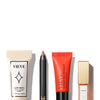
Or, just go for VIEVE’s Silhouette Stick. Each shade is intentionally cool-toned, so you get that natural, shadow-like finish without second guessing.
The texture? Creamy, blendable, and buildable, so you can keep things soft or dial up the definition depending on your mood.
It melts into the skin (no harsh lines here), giving that sculpted look that still feels like you.
And there’s 6 versatile shades, so there’s truly the perfect match for everyone. Take your pick from Fair, Light, Medium, Tan, Deep, and Rich.
Choose a Shade Based on Other VIEVE Products


FREQUENTLY ASKED QUESTIONS
How do I know what contour shade to choose?
How do I know what contour shade to choose?
Look for a shade slightly deeper than your skin tone with a cool undertone. It should mimic a natural shadow rather than adding warmth.
Should contour be lighter or darker than foundation?
Should contour be lighter or darker than foundation?
Contour should be slightly darker than your foundation to create depth but not dramatically darker. Subtlety is what keeps it looking natural.
What happens if my contour is too warm?
What happens if my contour is too warm?
It can start to look more like bronzer, adding warmth instead of structure. This can soften the sculpting effect and make definition less visible.